






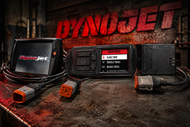
Dynojet Power Vision Options Explained
Posted by TMF Cycles on Aug 20th 2026
Dynojet Power Vision Explained: PV4 vs PV3 vs Original Power Vision for Harley-Davidson
If you’re looking to tune a Harley-Davidson, chances are you’ve come across several versions of the Dynojet Power Vision. The Original Power Vision, Power Vision 3 (PV3), and Power Vision 4 (PV4) can all be used as serious tuning tools, but the way you interact with each device is different.
One of the biggest misconceptions is that one version of the Power Vision is automatically more capable of making power than another. That isn’t really the case.
When properly set up and used with the correct tuning software, all three platforms can provide the control needed to properly calibrate a Harley-Davidson ECM. The biggest differences come down to the hardware, interface, connectivity, licensing, and tuning workflow.
At TMF Cycles, we use Dynojet tuning equipment as part of our dyno tuning process, so here’s a breakdown of what actually separates the three Power Vision platforms.
1.
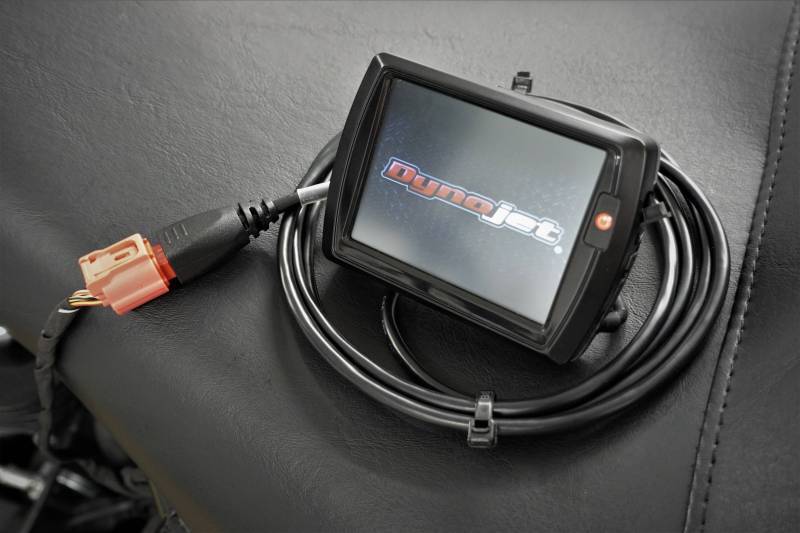
Original Power Vision — The OG
The Original Power Vision has been around since 2012 and is probably the unit most Harley riders associate with Dynojet tuning.
Sometimes referred to as the PV-1, PV-1B, PV-2B, or simply the OG Power Vision, it uses a large touchscreen display and allows a significant amount of interaction directly through the device.
For years, this has been one of the standard tuning tools used by Harley-Davidson performance shops and dyno tuners.
Original Power Vision Features
Large touchscreen interface
Tune flashing and management directly through the device
On-device data monitoring and diagnostics
Data logging
AutoTune capability
Wideband integration
Compatibility with Dynojet tuning software
Integration with Dynojet chassis dynos and automated tuning software
For experienced tuners, the Original Power Vision remains a very capable platform.
Its biggest advantage is the amount of control available directly through the device. If you like having a dedicated touchscreen mounted to the motorcycle and being able to work directly from that device, the OG Power Vision still makes a lot of sense.
2.
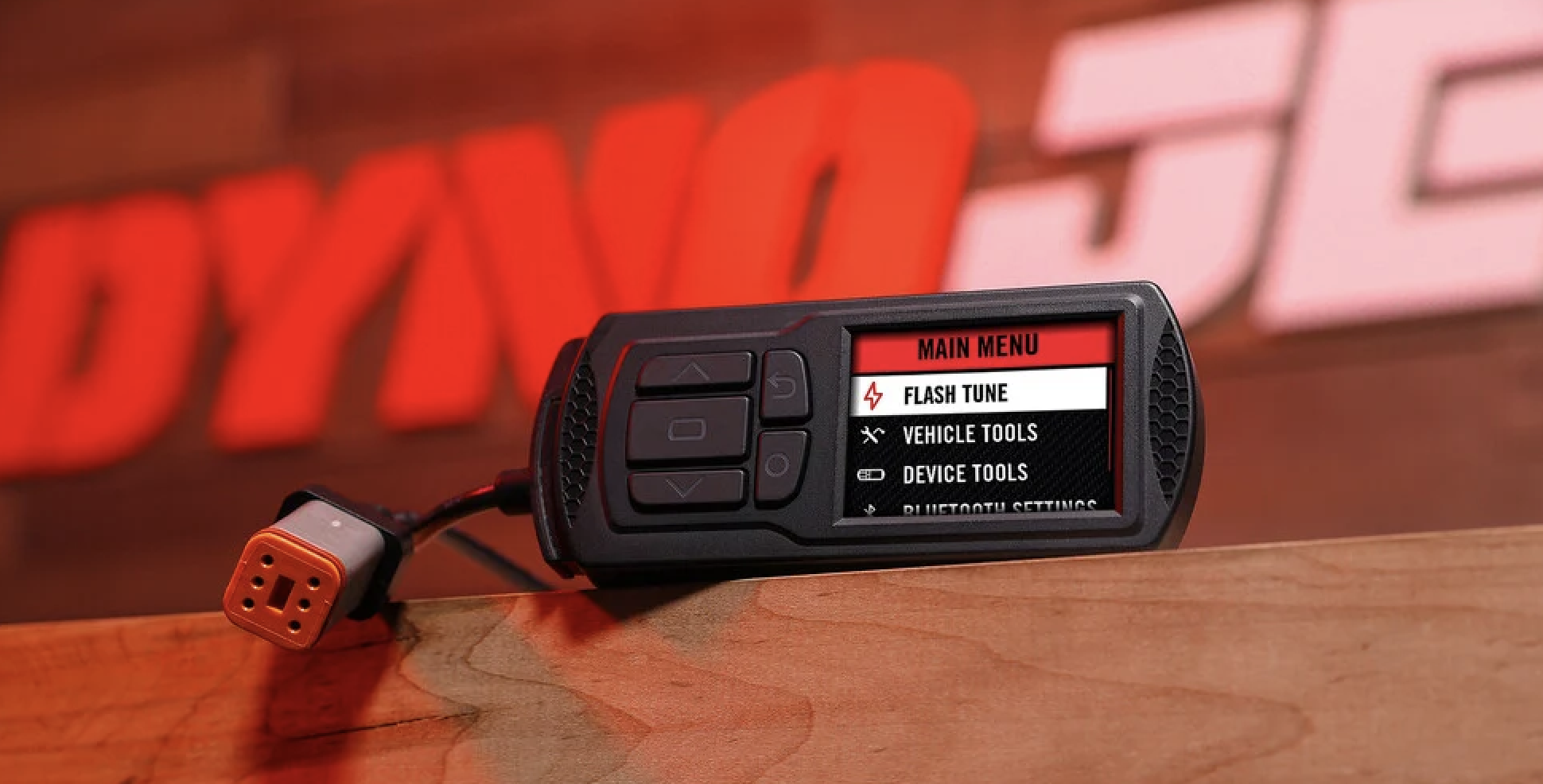
Power Vision 3 — Different Hardware, Serious Tuning Capability
The Dynojet Power Vision 3, or PV3, changed the physical design considerably.
Instead of the touchscreen found on the Original Power Vision, the PV3 uses a color TFT display with physical buttons.
That sometimes leads people to assume that the PV3 is a stripped-down tuning device.
It isn't.
The PV3 still provides the tuning capabilities required for serious Harley-Davidson calibration and works with Dynojet's Power Core tuning environment.
Power Vision 3 Features
Full-color TFT display
Physical button navigation
Excellent outdoor visibility
Data logging and diagnostics
AutoTune support
Wideband compatibility
Dynojet Power Core support
Dyno integration
Automated tuning capability
The biggest difference between the PV3 and Original Power Vision isn't how much horsepower you can make with them.
It's how you interact with the tuner.
For riders who want a durable standalone device without relying on a touchscreen, the PV3 is a solid option.
3.
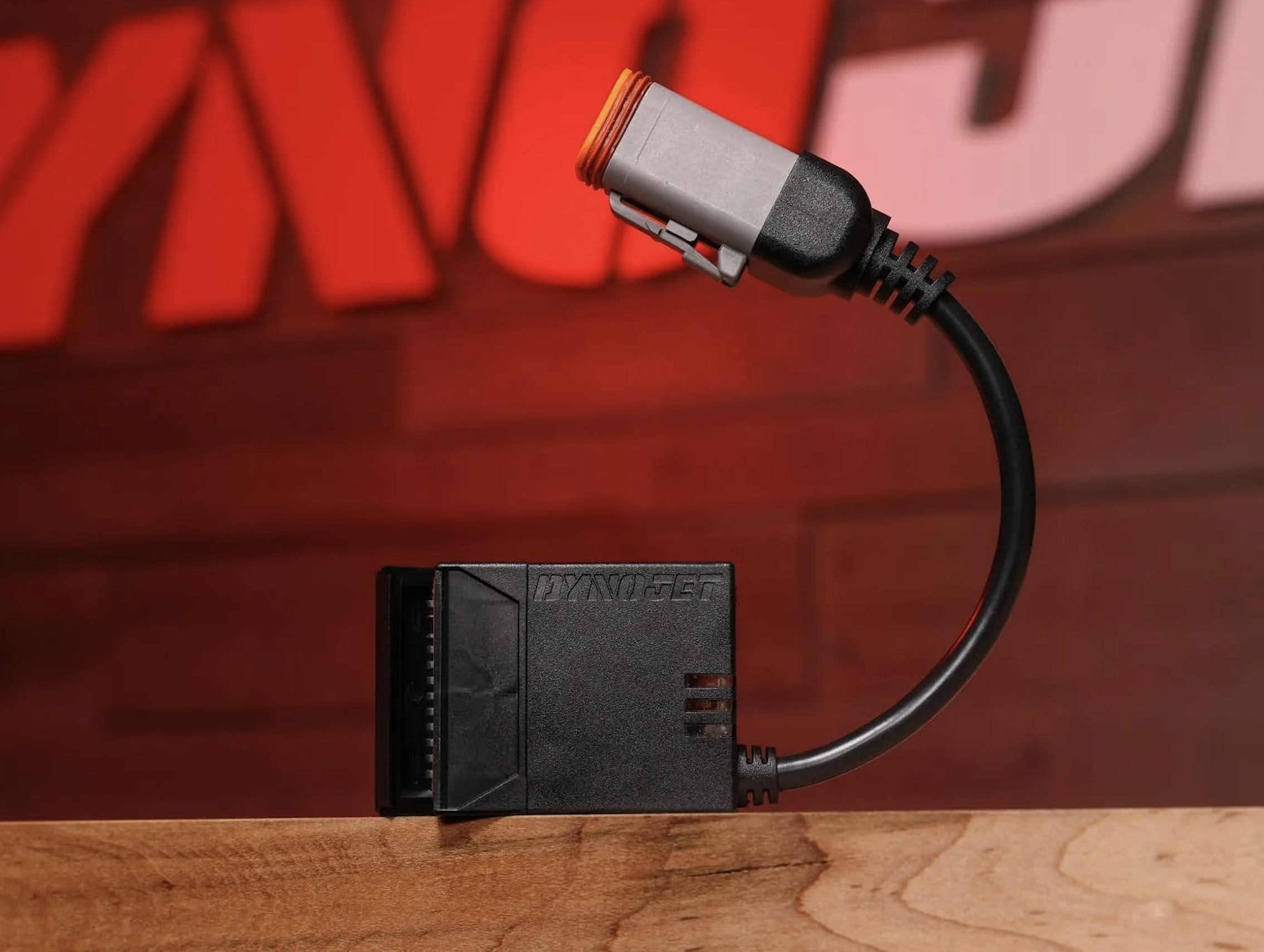
Power Vision 4 — A Different Approach
The Dynojet Power Vision 4 (PV4) represents a much bigger change in how the Power Vision ecosystem works.
Instead of putting everything into a large standalone display, the PV4 relies heavily on smartphone and cloud connectivity.
Tune files can be managed through your Dynojet account and the mobile app, eliminating much of the traditional process of moving files between a tuner, computer, USB connection, and tuning device.
Power Vision 4 Features
Smartphone-based interface
iOS and Android support
Cloud-based tune management
Data logging
Live data monitoring
Dynojet Power Core compatibility
Dyno integration through CAN
Automated dyno tuning support
Expanded diagnostic and service capabilities
For remote tuning, tune revisions, and shop workflow, this can be extremely convenient.
A rider can receive an updated calibration, flash the motorcycle, collect another data log, and continue the tuning process without constantly moving files between multiple devices.
Can the PV4 Make More Power Than a PV3 or Original Power Vision?
Not simply because it's a PV4.
This is an important distinction.
The tuner doesn't make the horsepower — the calibration does.
The quality of the tune depends on properly calibrating the motorcycle for its actual combination of engine components, airflow, fuel system, exhaust, compression, camshaft, and operating conditions.
Depending on the motorcycle and available tables, a proper calibration may involve adjustments to areas such as:
Volumetric efficiency
Air/fuel ratio
Ignition timing
Injector calibration
Electronic throttle control
Idle control
Acceleration enrichment
Deceleration settings
Rev limits
Engine protection strategies
The Power Vision gives the tuner access to the calibration. Knowing what to change — and more importantly, why it needs to be changed — is what produces the result.
That's why simply installing a canned tune isn't the same thing as properly dyno tuning a motorcycle.
AutoTune and Wideband Support
The Power Vision ecosystem can also work with Dynojet's various AutoTune and wideband systems.
Depending on the application and Power Vision model, this can include systems such as:
AutoTune
AutoTune Pro
Target Tune
Smart Tune Pro
Wideband oxygen sensors provide significantly more useful air/fuel information than the factory narrowband sensors when tuning outside the narrow operating range where the stock sensors are designed to function.
This is especially important on modified engines where airflow can be dramatically different from the factory calibration.
PV4 Licensing Is Different
One of the more important differences with the PV4 is the way licensing works.
Traditional Power Vision devices have historically been closely tied to the motorcycle they are licensed to.
The PV4 uses a vehicle/license-based system rather than making the physical PV4 hardware itself permanently specific to one motorcycle.
That means the same PV4 hardware can be connected to another properly licensed motorcycle.
For a professional shop working with multiple motorcycles, this can make the workflow considerably easier.
PV4 Diagnostic and Service Functions
The PV4 platform has also expanded beyond simply flashing calibrations.
With the appropriate Dynojet licensing and supported application, additional service and diagnostic functions may be available, including sensor testing and certain actuator or system tests.
That makes the PV4 increasingly useful as both a tuning interface and diagnostic tool.
Available functions can vary depending on the motorcycle, ECM and Dynojet software support, so compatibility should always be verified for the specific application.
Which Power Vision Should You Choose?
There isn't one answer that works for everyone.
Choose the Original Power Vision if:
You prefer a large touchscreen, want a dedicated standalone display, or are already comfortable with the traditional Power Vision workflow.
Choose the Power Vision 3 if:
You want a rugged standalone device with physical controls while retaining serious tuning and data-logging capabilities.
Choose the Power Vision 4 if:
You want smartphone integration, cloud-based tune delivery, modern licensing, easy data logging, and a streamlined workflow for receiving tune revisions.
For most riders, the decision should be based more on how the device will be used than which one sounds newer.
The Tuner Matters More Than the Tuning Device
This is ultimately the most important part.
A Power Vision is a tool.
Bolting together a high-compression engine, installing a larger throttle body, bigger injectors, aftermarket heads, a performance cam and a free-flowing exhaust dramatically changes what the engine needs from the calibration.
A generic map may get the motorcycle running, but that doesn't mean the calibration is optimized.
Proper dyno tuning allows the calibration to be evaluated under controlled RPM and load conditions while monitoring what the engine is actually doing.
At TMF Cycles, our approach is to tune the motorcycle as a complete combination rather than chase a horsepower number with a one-size-fits-all calibration.
Fueling, ignition timing, throttle response, drivability and engine safety all matter.
Dyno Tuning at TMF Cycles
TMF Cycles specializes in Harley-Davidson performance, engine builds and dyno tuning.
Whether you're running a basic cam-and-exhaust combination or a high-compression big-bore Milwaukee-Eight build, the goal is the same: build a calibration around the actual motorcycle.
We use professional Dynojet equipment to evaluate the motorcycle under controlled load and make calibration changes based on real operating data.
Because making peak horsepower is only part of a properly tuned motorcycle.
Throttle response, torque, drivability, consistency and reliability matter too.
If you're building a performance Harley-Davidson and aren't sure which Power Vision is right for your combination, or you're ready to have the bike professionally dyno tuned, contact TMF Cycles.